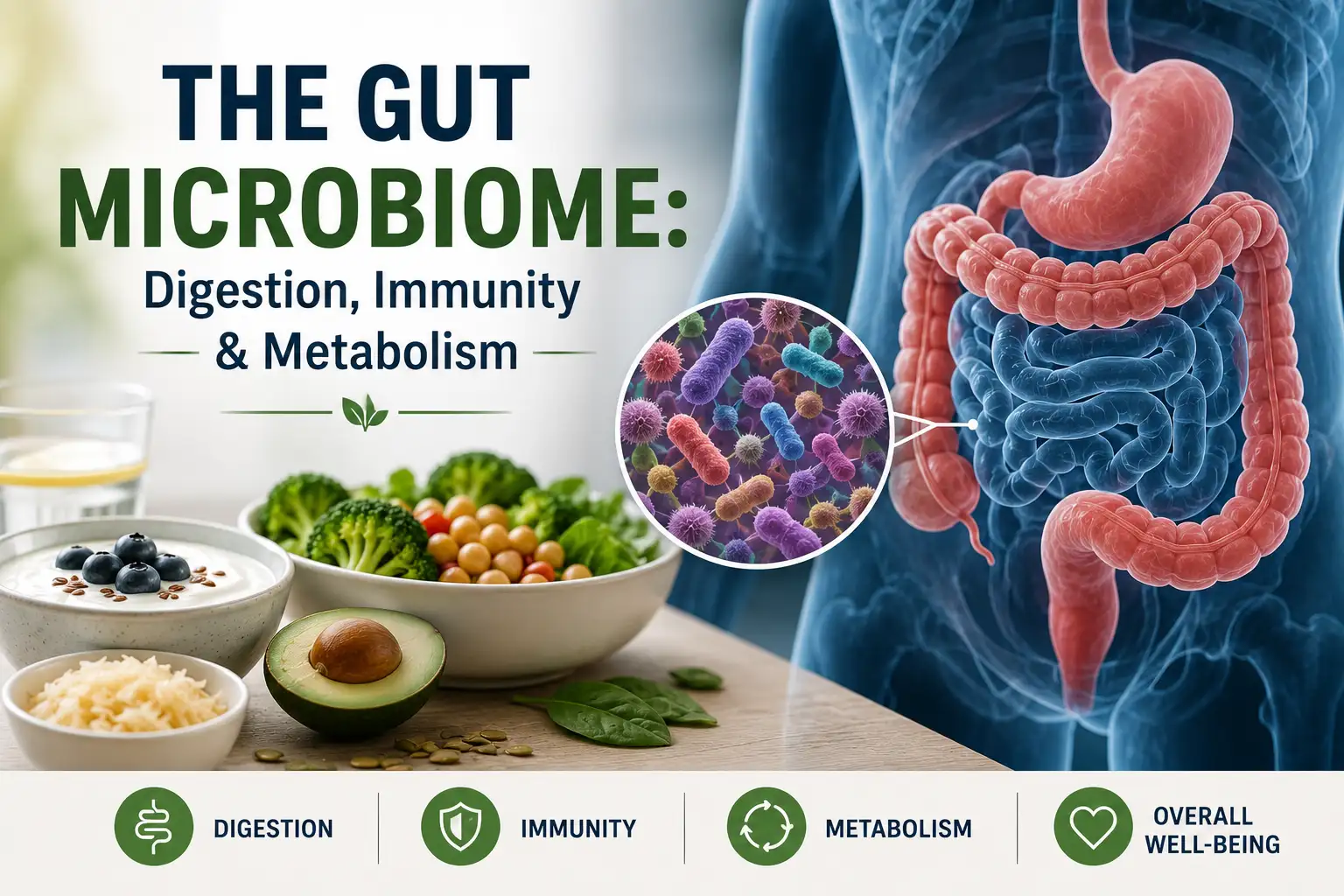
The gut microbiome is the complex community of microorganisms living throughout your gastrointestinal tract, especially in the large intestine. These microorganisms include many types of bacteria along with other microbes. Rather than simply occupying the digestive tract, they interact with food, the intestinal lining, immune cells, and substances produced during digestion.
That makes gut health relevant to more than bowel movements alone. Gut microorganisms help process parts of food that human digestive enzymes cannot completely break down, produce biologically active compounds, and interact with pathways involved in intestinal barrier function, immunity, and metabolism. Research into these relationships is continuing, so changes in the microbiome should not automatically be treated as the explanation for every digestive or systemic symptom.
At M.F. Family Health NP P.C in Staten Island, gut health can be considered within Dr. Marina Fest, DNP’s broader functional medicine evaluation when it is relevant to a patient’s symptoms. Our approach looks at the gut alongside factors such as nutrition, lifestyle, hormones, thyroid function, environment, laboratory findings, and overall physiology rather than viewing one body system in isolation.
What Exactly Is the Gut Microbiome?
The gut microbiome refers to the community of microorganisms living within the digestive tract and the biological environment created through their interaction with the body.
You will also see the term gut microbiota. In everyday health discussions, the two terms are often used closely together. Gut microbiota refers more specifically to the microorganisms themselves, while microbiome can be used more broadly when discussing the microbial community and its biological functions.
Not every microorganism in the gut is harmful. Many normally living bacteria participate in useful functions, including helping digest certain food components, producing vitamins or other compounds, competing with potentially harmful organisms, and interacting with the immune system.
The important point is that your intestine is an ecosystem, not a sterile tube.
How Does the Gut Microbiome Help With Digestion?
Human digestive enzymes can break down many carbohydrates, proteins, and fats. However, some dietary components reach the colon without being fully digested.
This is especially important for certain forms of dietary fiber and complex carbohydrates.
Gut bacteria can ferment some of these materials and convert them into compounds called short-chain fatty acids, or SCFAs. Three frequently discussed SCFAs are:
- Acetate
- Propionate
- Butyrate
These microbial metabolites are not simply waste products. Short-chain fatty acids can serve as energy sources, particularly for cells lining the colon, and participate in signaling involved in intestinal and metabolic function.
This provides a useful example of the relationship between food and gut microorganisms:
dietary fiber → microbial fermentation → short-chain fatty acids → interaction with intestinal and body functions
Food therefore affects health not only through nutrients absorbed directly from the digestive tract. Some foods also provide substrates that gut microorganisms can use.
Why Does the Gut Microbiome Matter for the Intestinal Barrier?
The intestinal lining has a difficult job.
It must allow nutrients and other necessary substances to pass from the digestive tract into the body while maintaining a controlled barrier between intestinal contents and internal tissues.
The gut microbiota and compounds produced by these microorganisms participate in maintaining this intestinal environment. Research on short-chain fatty acids, particularly butyrate, has identified roles involving energy for intestinal epithelial cells and regulation of intestinal barrier function.
This relationship helps explain why researchers often examine the microbiome together with the intestinal lining, inflammation, and immune system rather than studying microorganisms alone.
It does not mean that every digestive symptom indicates a damaged intestinal barrier, however. Symptoms still require appropriate clinical evaluation.
How Does the Gut Microbiome Interact With the Immune System?
The intestinal tract is an important site of interaction between microorganisms and the immune system.
Gut microorganisms and the compounds they produce can communicate with immune cells located around the intestinal environment. Short-chain fatty acids are among the microbial metabolites being studied for their roles in regulating immune signaling and helping maintain intestinal immune balance.
This relationship has several purposes.
The immune system has to distinguish among:
- Normal microorganisms
- Food-related material
- Potentially harmful organisms
- Other substances entering the digestive tract
An effective response therefore requires regulation, not simply maximum immune activity.
For this reason, phrases such as “boosting the immune system” can oversimplify what is happening. A healthy immune response depends on appropriate recognition, activation, control, and resolution.
The microbiome is one contributor to that process, not the entire immune system.
How Can the Gut Microbiome Affect Metabolism?
The relationship between gut microorganisms and metabolism is one of the most actively researched areas of microbiome science.
Gut microbes transform food components into metabolites that can interact with intestinal cells and signaling pathways throughout the body. Short-chain fatty acids, bile-acid related pathways, intestinal barrier integrity, and immune signaling are among the mechanisms being investigated for their relationships with energy balance and metabolic regulation.
This research has led scientists to examine relationships between the gut microbiome and conditions involving:
- Blood sugar regulation
- Insulin sensitivity
- Body weight
- Lipid metabolism
- Metabolic inflammation
But an important distinction is necessary.
Finding differences in the microbiomes of people with different metabolic conditions does not mean that one specific bacterial pattern is always the cause of the condition. Metabolism is also influenced by diet, genetics, physical activity, sleep, medications, body composition, hormones, existing disease, and many other factors.
The gut should therefore be evaluated as part of the metabolic picture rather than used as a single explanation for it.
What Factors Can Change the Gut Microbiome?
The gut microbial community is dynamic.
Its composition can differ between individuals and can change in response to multiple influences, including:
- Diet
- Age
- Medications
- Antibiotic exposure
- Health conditions
- Lifestyle
- Environment
Diet is particularly relevant because the foods reaching the gastrointestinal tract help determine which substrates are available to gut microorganisms.
For example, dietary fiber can be fermented by certain bacteria to produce short-chain fatty acids. This is one reason researchers are studying the relationship among food, gut microorganisms, and microbial metabolites.
However, changing one food does not allow us to predict exactly how a person’s entire microbiome will respond.
Do Bloating, Constipation, or Fatigue Mean Your Gut Microbiome Is Unhealthy?
Not necessarily.
This is an important distinction in functional medicine.
Symptoms such as:
- Bloating
- Gas
- Diarrhea
- Constipation
- Abdominal discomfort
- Fatigue
- Changes in appetite
may justify looking more closely at gastrointestinal health, but they are not microbiome diagnoses.
Similar symptoms can occur with food intolerances, medication effects, infections, inflammatory gastrointestinal conditions, irritable bowel syndrome, thyroid disorders, dietary changes, and numerous other medical issues.
A useful clinical evaluation therefore asks:
What symptoms are present? → When did they begin? → What is the dietary and medical context? → Are there warning signs? → What testing, if any, is appropriate?
The answer should come before the treatment plan.
Does Everyone Need a Gut Microbiome Test?
No.
The growing commercial availability of microbiome tests can create the impression that everyone needs to identify the exact bacteria living in their intestine before improving gut health.
Clinical decisions are more complicated than that.
Microbiome research is developing rapidly, but there is still substantial uncertainty about how to translate many microbial differences into specific treatment decisions for an individual patient. Even probiotic research shows that effects can differ according to the particular organism, product, condition, and patient.
Testing should therefore have a clear clinical purpose.
At our practice, Dr. Fest’s functional medicine approach can include deeper evaluation of gut health and appropriate testing when the patient’s symptoms and clinical picture justify it.
Are Probiotics the Same Thing as the Gut Microbiome?
No. The gut microbiome is the existing microbial community within the gastrointestinal tract.
Probiotics are live microorganisms consumed or administered with the intention of providing a health benefit.
They are related concepts, but taking a probiotic does not simply “replace” or “fix” the entire microbiome.
Different probiotic strains can have different effects, and evidence is much stronger for some uses than others. NCCIH notes that researchers still do not know which probiotics are most useful for many conditions, what doses are ideal, or which patients are most likely to benefit.
That is why a probiotic supplement should not automatically be the first response to every digestive complaint.
Gut Health Makes More Sense When We Look at the Whole Clinical Picture
The gut microbiome supports important biological processes because microorganisms in the digestive tract interact with food, intestinal cells, microbial metabolites, immune pathways, and metabolic signaling.
But microbiome science is not a shortcut that allows every symptom to be explained by “bad gut bacteria.”
At M.F. Family Health NP P.C, we can look at gut health in the context of your symptoms, nutrition, medications, health history, laboratory findings, hormones, thyroid function, and other relevant factors. Dr. Marina Fest’s functional medicine approach is designed to connect those pieces when a broader investigation is appropriate.
If ongoing digestive or unexplained symptoms are affecting how you feel, the useful first step is understanding the clinical pattern rather than guessing which microorganism needs to be changed.
Frequently Asked Questions
What is the difference between the gut microbiome and gut bacteria?
Gut bacteria are one group of microorganisms living in the gastrointestinal tract. The gut microbiome describes the broader microbial community and its biological interactions. The gut also contains other types of microorganisms in addition to bacteria.
How does fiber support the gut microbiome?
Certain gut microorganisms ferment dietary fibers that human digestive enzymes do not completely break down. This process can produce short-chain fatty acids such as acetate, propionate, and butyrate, which interact with intestinal, immune, and metabolic functions.
Does the gut contain part of the immune system?
The gastrointestinal tract contains extensive immune activity, and gut microorganisms interact with immune cells and the intestinal barrier. The microbiome helps influence immune regulation, but it should not be described as the entire immune system.
Should everyone take probiotics for gut health?
No. Probiotic effects depend on the microorganism, product, health condition, and patient. Evidence supports some specific uses, while evidence for many other claims remains uncertain. A probiotic should not replace appropriate medical evaluation or established treatment.
Where can I discuss gut health in Staten Island?
Dr. Marina Fest, DNP provides functional medicine care through M.F. Family Health NP P.C in Staten Island. Her functional medicine service can evaluate gut health together with nutrition, lifestyle, hormones, thyroid function, laboratory findings, and other relevant aspects of the patient’s health.